
Daily Email Series
Launch Your Shopify Store in 30 Days
Join Now for only $19.99
Get the full 30 day daily email series + Bonus Day 31
After the first 50 spots, pricing increases to $29.99.

 About The Series
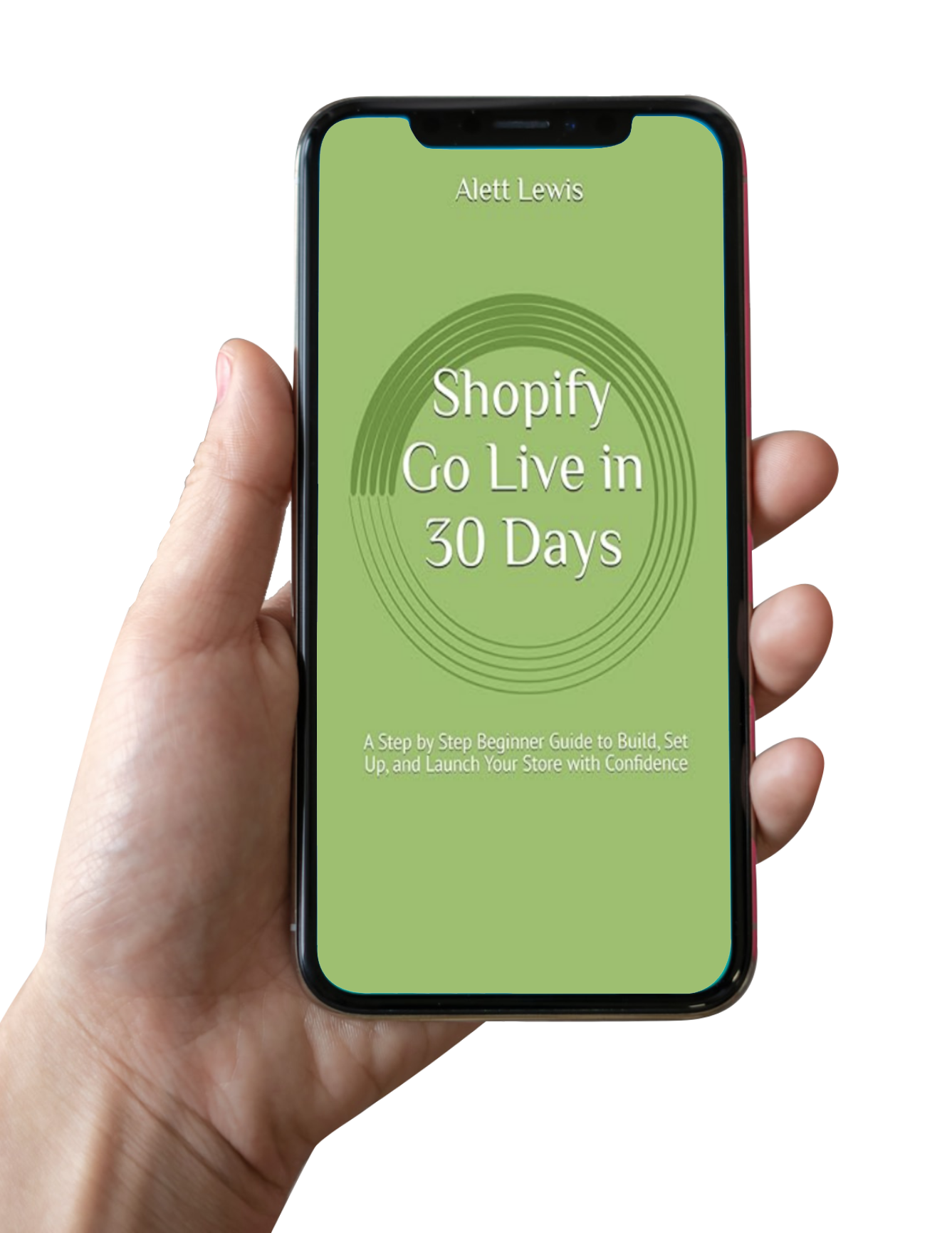
Launch Your Shopify Store in 30 Days is a simple, guided email series that delivers one clear step each day for 30 days. Every email keeps you focused on what matters most right now, with beginner friendly instructions you can follow quickly and confidently. By the end, you will have a clean, working Shopify store that is set up to sell and ready to share.
After Day 30, you will get Bonus Day 31+ emails with next step guidance for improving your store after launch, like simple conversion upgrades, product page improvements, and basic marketing moves that keep momentum going. You will also receive additional references along the way, including helpful links, recommended tools, and optional deeper learning resources so you can keep building without getting overwhelmed.
“One email a day. One clear task. A real Shopify store at the end of 30 days.”
What’s inside
What’s insideOne email per day (30 days)
Click path instructions in Shopify
Store owner setup basics
Theme and homepage build
Pro tips and common mistakes
Launch checklist + Bonus Day 31+
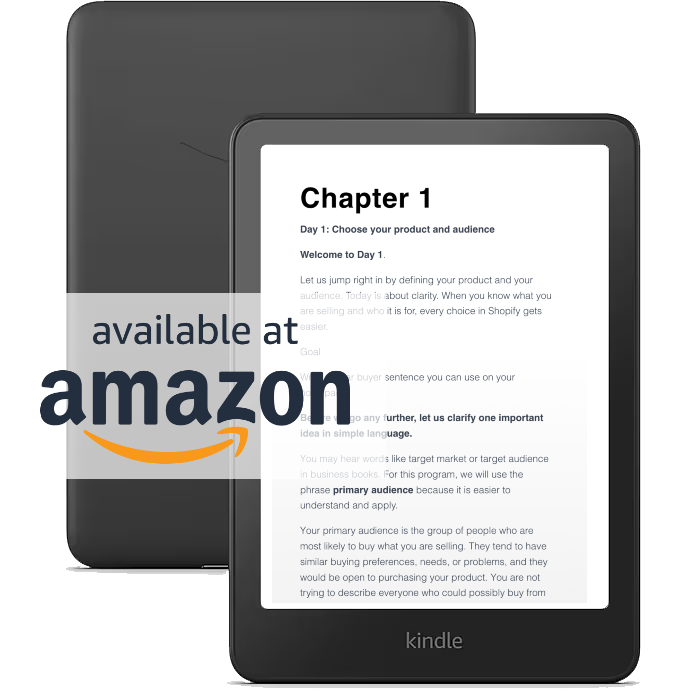
Chapter 1
Day 1: Choose your product and audience
Welcome to Day 1.Let us jump right in by defining your product and your audience. Today is about clarity. When you know what you are selling and who it is for, every choice in Shopify gets easier.
Goal
Write a clear buyer sentence you can use on your homepage.
Before we go any further, let us clarify one important idea in simple language.
You may hear words like target market or target audience in business books. For this program, we will use the phrase primary audience because it is easier to understand and apply.
Your primary audience is the group of people who are most likely to buy what you are selling. They tend to have similar buying preferences, needs, or problems, and they would be open to purchasing your product. You are not trying to describe everyone who could possibly buy from you. You are identifying the group that makes the most sense to focus on first.
Think of your primary audience as the people your store is speaking to directly.
Best practices for today
- Start with one primary audience. Trying to speak to everyone usually results in a store that feels unclear and generic.
- Your primary audience should feel real. Picture an actual person, not a label. Think about age range, lifestyle, interests, and daily challenges.
- Focus on who benefits the most from your product, not who might buy it someday.
- Use simple language. Describe your audience the way you would explain it to a friend, not in marketing terms.
- Remember, choosing a primary audience does not exclude other buyers. It simply gives your store a clear starting point.
If you ever feel stuck, ask yourself this question:
If one person walked into my store today, who would I most want them to be?
That person represents your primary audience.
Once this is clear, writing product descriptions, choosing photos, and designing your store becomes much easier.
Best practices
These are the habits that keep your store clean and professional. They are simple rules that prevent beginner mistakes and make your site easier to shop.
- Start with one audience first.
- Use customer language, not jargon.
- Pick a product you can deliver consistently.
Pro tips
Pro tip: clarity improves conversion
The clearer your store is, the easier it is for a shopper to say “yes.” When a visitor lands on your site, they are silently asking: Is this for me? Do I trust this? Is it worth the price? A clear primary audience helps you answer those questions quickly. If your product and audience feel specific, your photos, headlines, and product descriptions naturally sound more confident, and that usually leads to more add to carts and fewer people bouncing away.
Pro tip: your audience shapes design and messaging later
Once your primary audience is clear, design becomes a lot easier because you have a direction.
- If your buyer is modern and minimalist, your store might use clean typography, lots of whitespace, and simple product photos.
- If your buyer is bold and playful, your colors, language, and imagery can be more energetic.
- If your buyer is practical and budget conscious, your messaging will lean more toward value, clarity, and reassurance.
This does not mean you need to design everything today. It just means your audience becomes the compass for future decisions so your store feels consistent instead of random.
Pro tip: when and how to expand your audience after launch
At launch, focus on one primary audience. After your store is live and you have real traffic and sales data, you can expand in a smarter way.
A simple rule: Expand when you can clearly answer these questions with real evidence:
- Who is actually buying right now
- What product is selling the most
- What messages are getting the most clicks
Once you have that info, expanding becomes simple and low risk. Pick one of these paths:
- Add a second audience only if the product stays the same
Example: you sell minimalist jewelry for busy professionals. Later you add messaging for gift shoppers without changing the products. - Add a second product line only if the audience stays the same
Example: your audience is new moms. You start with one product, then add two more items that solve the same type of need. - Create one new collection for a new shopping intent
Example: “Best Sellers,” “Gifts,” or “Workwear.” This is an easy way to expand without rebuilding your whole store.
The key is to expand using real store behavior, not guesses. You do not need a perfect audience on Day 1. You need a clear starting point.
Why this sequencing matters
This structure prevents the most common beginner mistake: filling out worksheets without understanding what decision they are actually making.
Day 1 is not busywork. It is the foundation that makes everything else easier, from naming your store to writing product descriptions to choosing photos and building a homepage that feels like it was made for the right buyer.
Common mistakes to avoid
- Choosing three audiences at once.
- Trying to design a logo before you know the buyer.
- Overthinking the niche.
Do this now
These steps are your action plan. Follow them in order and do not get stuck perfecting small details. Progress first, polish later.
Step 1: Write your buyer sentence
This is a simple sentence that clearly describes who your store is for and what you help them find or solve.
Formula you can use:
“I help [type of person] find [type of product or result] so they can [benefit or outcome].”
Examples:
- “I help busy moms find comfortable, put-together everyday outfits so they can get dressed fast and still feel confident.”
- “I help petite women find well-fitting, modern basics that work for real life, not just trends.”
- “I help new dog owners find practical, high-quality walking gear so daily walks feel easier and more enjoyable.”
- “I help women over 40 find flattering, easy-to-style pieces they can wear on repeat.”
- “I help home bakers find beginner-friendly decorating tools so they can create professional-looking treats at home.”
Save it. You will reuse it for your hero section and product descriptions. This sentence becomes your filter. If a product does not make sense for this person, it does not belong in your store.
Setup journal
In this section, write down key decisions and important details in a notebook or notes app. Think of it as your store setup log. Keeping these notes will save time later when you need account information, settings, or a reminder of what you chose.
- Product in one sentence
- Primary buyer
- Three words that describe your customer
Done checklist
Use this checklist to confirm you are ready to move on. If you miss one item, that is okay. Make a note in your setup notebook and come back to it later.
- Buyer sentence.
- 3 customer words captured.
Read more: https://help.shopify.com/en/
Shopify Help Center: Choosing products and audience research
Shopify Help Center: Customer segments and targeting basics
Chapters
Pages
Skip the overwhelm and follow a clear daily plan that turns “someday” into a live Shopify store. Built for beginners who want calm, confident progress without hype or complicated tech.



About the author
Shopify and WordPress designer and developer with 9+ years of experience. Has helped brands launch and improve online stores through better structure, messaging, and customer flow.
Alett Lewis

Other formats
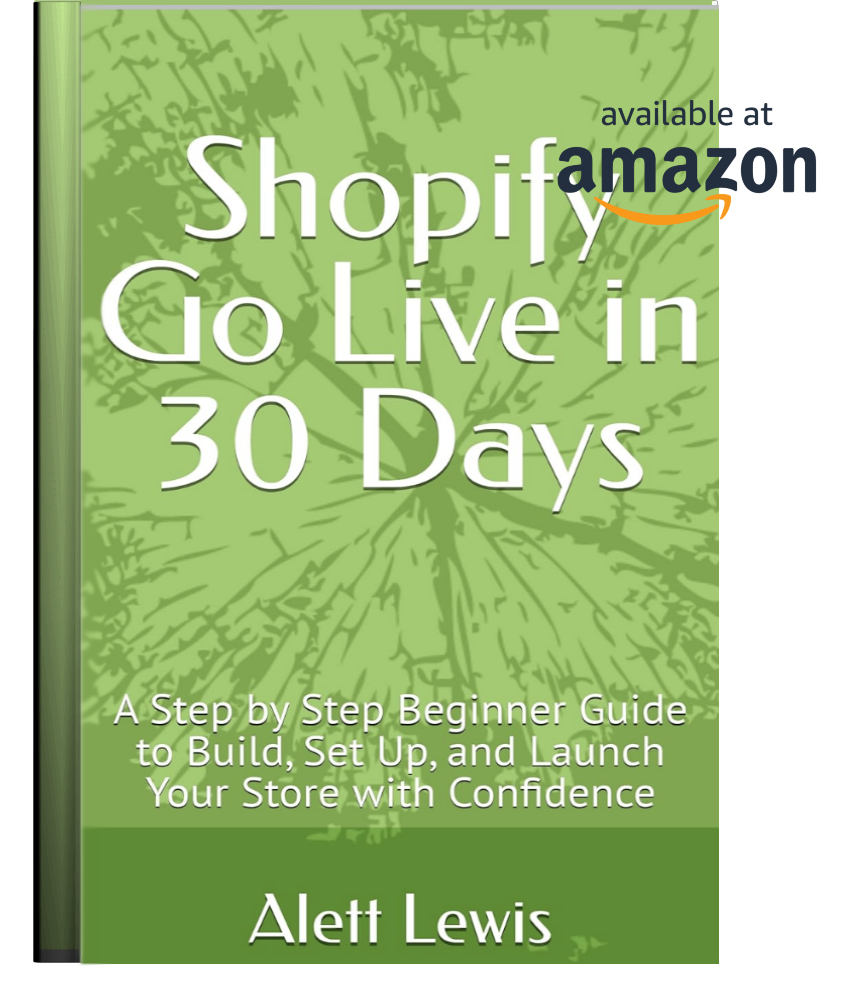

Design Principles for Everyone
Upcoming book!
Have Questions?
Ask anything about the book or your store setup. Reply within 1 business day.